The Bulk-Buy Assumption: 30 Shelf Labels, Five Supermarkets and the 18 Times Small Beat Big
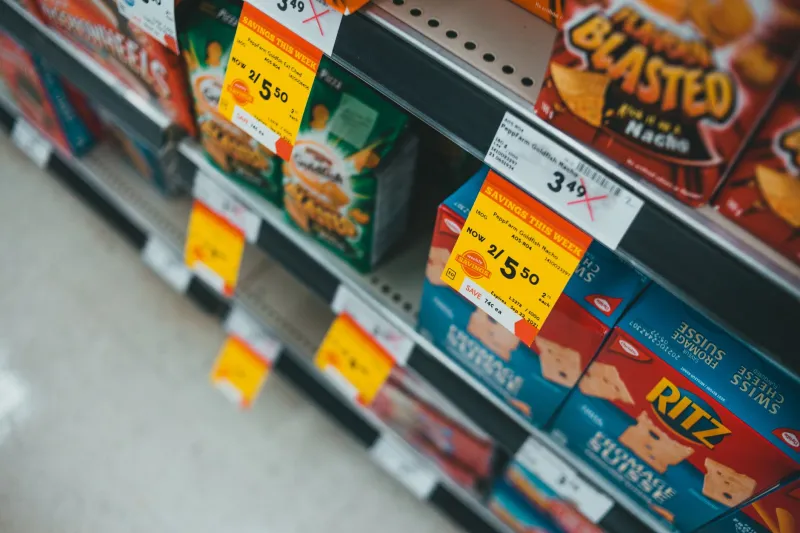
There is a comforting story we tell ourselves in the supermarket: the big pack is the sensible pack. It fills the cupboard, it cuts the number of trips, and it must be cheaper per gram. That story is sometimes true. Over the past month, we checked 30 everyday products across five UK supermarkets — cereal, pasta, tea, yoghurt, cleaning spray, toilet roll, frozen peas, shampoo, coffee, biscuits, rice, laundry pods and a few other trolley regulars — and the bigger pack won on unit price just 12 times. The smaller pack, or a different format entirely, was cheaper 18 times.
That is not a scandal. It is a reminder that shelf-edge labels are information, not instructions. And the small print — the price per 100g, per 100ml or per item — is only useful if you slow down long enough to read it properly.
What we actually compared
We did not compare whole baskets or loyalty prices. We compared like for like: same brand where possible, same product type, same supermarket visit. We noted pack size, shelf price, unit price and any multibuy wording. Then we converted everything to a common unit — 100g, 100ml, per wash, per sheet, per metre — because that is where the trick often starts.
A few patterns turned up quickly:
- Cereal and biscuits were the worst offenders. A 750g box looked cheaper than a 500g box on the shelf, but the unit price told a different story once the smaller box was on a temporary deal.
- Cleaning sprays and laundry products often hid value in concentration. A smaller bottle of concentrated spray could work out cheaper per use than a big ready-to-use bottle, even when the big bottle had the louder label.
- Toilet roll and kitchen roll were a mess of sheet counts, ply and roll length. The biggest pack was rarely the cheapest per sheet.
- Frozen vegetables and rice were more honest. The bigger bag usually did win, though not by as much as the shelf talker implied.
The bigger pack was not a con. It was just not a guarantee.
The unit-price label is not always the whole story
Unit pricing is one of the better bits of UK grocery regulation. It gives you a fighting chance. But it can still mislead if you compare the wrong things.
A price per 100g on a box of cereal is not directly comparable to a price per 100g on a box that includes a free toy, a prize draw or a smaller serving suggestion. A price per litre on shampoo is not much use if one bottle is shampoo and the other is conditioner. A price per wash on laundry pods depends on whether you use one pod or two. And a price per sheet on toilet roll is only fair if the sheets are the same size.
We found several cases where the unit price was technically correct but practically useless. One example: a large pack of yoghurt pots was priced per 100g, while a smaller pack was priced per pot. Once we converted both, the smaller pack was cheaper — but only because the pots were smaller. That is not a saving if you end up using two.
The lesson is not to distrust unit pricing. It is to use it as a starting point, then check the pack size and the product itself.
Where bulk buying still earns its place
Bulk buying was not rubbish. It won 12 times, and those wins were usually boring in the best way.
Store-cupboard staples with long dates did well: rice, pasta, tinned tomatoes, frozen peas. So did products we use in predictable amounts, like bin liners and dishwasher tablets. When the product is identical, the shelf life is long and the storage space exists, the big pack often does what it says on the tin.
But even then, the gap was smaller than the marketing suggested. In several cases, the bigger pack saved only a few pence per 100g. If you have to drive further, use more cupboard space or risk wasting half a bag, that is not a clear win. The best bulk buy is the one you will actually use before it goes stale, goes off or gets lost at the back of the cupboard.
The three-step check before you assume bigger is better
If you want to avoid the bulk-buy assumption, here is the routine we ended up using.
1. Convert to the same unit and the same use. Ignore the shelf price for a moment. Look at price per 100g, per 100ml, per wash or per sheet. Then ask whether the product is truly comparable. A concentrated cleaner, a bigger bottle, a different ply of toilet roll — these are not the same thing in different sizes.
2. Check the multibuy against the single. A big pack is not the only bulk option. Sometimes a single item on promotion beats a multipack at full price. Sometimes the loyalty price only applies to one pack. Sometimes the 'was' price is doing more work than the 'now' price. Compare the actual amount you will pay at the till, not the label that shouts the loudest.
3. Do the storage and waste maths. A 4kg bag of rice is only good value if you have somewhere cool and dry to keep it. A giant bottle of sauce is only a saving if you will finish it. If the bigger pack means waste, the unit-price saving can disappear in the bin.
What this means for your weekly shop
We are not saying you should buy small everything. That would be just as lazy as buying big everything. The point is that the bigger pack is a suggestion, not a verdict.
In our 30-product check, the small pack was cheaper 18 times — often because of a temporary deal, a different format or a unit-price label that looked comparable but was not. The bigger pack won 12 times, mostly on boring staples where the product was identical and the shelf life was long.
That is a useful split. It means the bulk-buy assumption is right about half the time. The other half, it is costing you money while making you feel organised. Next time you reach for the family-size pack, spend ten seconds on the small print. The cheaper option might be sitting right next to it.