The £200 Air Fryer Myth: What a Month of Chips, Chicken and Cake Taught Us
Two air fryers have been living on my counter since the start of October. One is a £49 own-brand model from a UK supermarket aisle — 4.5 litres, two dials, a wire basket and a manual that looks like it was translated in a hurry. The other is a £249 dual-basket machine with a touchscreen, app pairing, 12 presets and a two-year warranty. In 2026, the air fryer aisle is packed with both kinds of machine, so I cooked 40 meals in them, side by side where possible, and kept a notebook. By the end, the expensive one had earned a place in the kitchen. It just hadn't earned £200 of it.
What we cooked (and how we judged it)
The test wasn't a lab. It was a normal British kitchen with a dodgy extractor fan and a freezer full of oven chips. I made frozen chips, roast chicken thighs, sausages, halloumi, roasted veg, reheated pasties and two batches of fairy cakes. Same weights, same temperatures where the machines allowed it, same timing checks. I used a cheap energy monitor for the electricity and a digital thermometer for the chicken. I also wrote down noise, cleaning time and whether the basket coating started to mark.
Chips and chicken: the gap is smaller than the box suggests
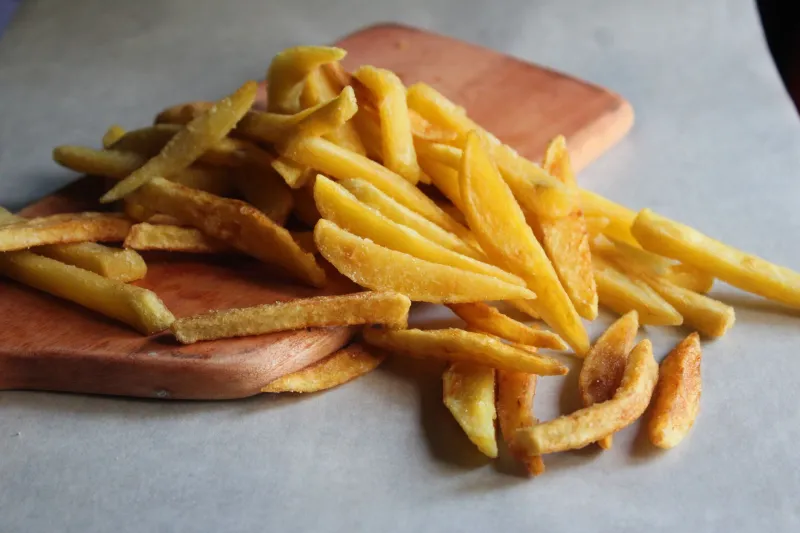
Frozen chips were the closest call. The £249 model preheated faster and had a wider basket, so a 700g batch came out more evenly. The £49 model needed a shake at the halfway point and left a few pale stragglers at the front. Were they £200 worse? No. They were slightly more faffy. Roast chicken thighs were similar: both got crisp skin, both rendered properly, and both needed a check with the thermometer. The premium machine's dual zones meant I could do chicken in one side and veg in the other without timing gymnastics. That's a real convenience gain, not a flavour miracle.
Cakes, toasties and the features nobody uses
The budget fryer struggled more with cakes. The hot spot near the back meant one tray of fairy cakes browned faster than the other, so I rotated halfway. The premium model was more even, but the difference was cosmetic. The app, dehydration mode and 12 presets? I used the presets twice. The app once, to see if it worked. It did. I still haven't needed to start dinner from the bus. If you are buying for a household that will genuinely use two baskets at different temperatures, pay for that. If you are buying because the box says smart, save your money.
The energy maths
Both machines pulled roughly similar power when running, and the premium one was a little quicker on some batches. Over 40 meals, the difference on my energy monitor was small — pence per meal, not pounds. Neither replaced the oven completely, but both were cheaper than heating a big fan oven for a single portion. The real energy saving came from cooking smaller amounts, not from the badge on the front.
Build quality, cleaning and the annoying bits
The £249 fryer felt sturdier. The drawer slid in with a satisfying clunk, the non-stick basket wiped clean, and the whole thing was quieter. The £49 model rattled, the drawer needed a firm shove, and the basket started to show faint scratches after a month of daily use. It still worked. Cleaning was a wash: both baskets went in the sink, neither was properly dishwasher-safe in the way the marketing implies. The premium model's flat heating element was easier to wipe than the budget model's exposed coil.
Warranty and support: the boring bit that matters
This is where the extra money can be justified. The budget fryer came with a one-year guarantee and a support line that sent me to a web form. The premium model had a two-year warranty, a UK phone number and a spare-parts page. If you use an air fryer most days, that cover has value. If you use it twice a week, it probably doesn't.
So who should pay more?
Pay £249 if you cook for four or more, regularly want two different things at once, care about a quieter machine and want a longer warranty. Buy the £49 model if you are cooking for one or two, mostly doing chips and nuggets, and you already have a decent oven. The smarter buy for most people is the middle: £90 to £130 gets you a larger basket, better coating and a digital timer without the app gimmicks. The £200 gap is mostly noise — spend it on the size and layout that fits your kitchen, not the feature list.